
Teaching reading comprehension becomes more meaningful when children are interested in the topic. This Famous Landmarks Reading Comprehension resource introduces first-grade learners to remarkable places around the world while giving them focused practice with short nonfiction texts.
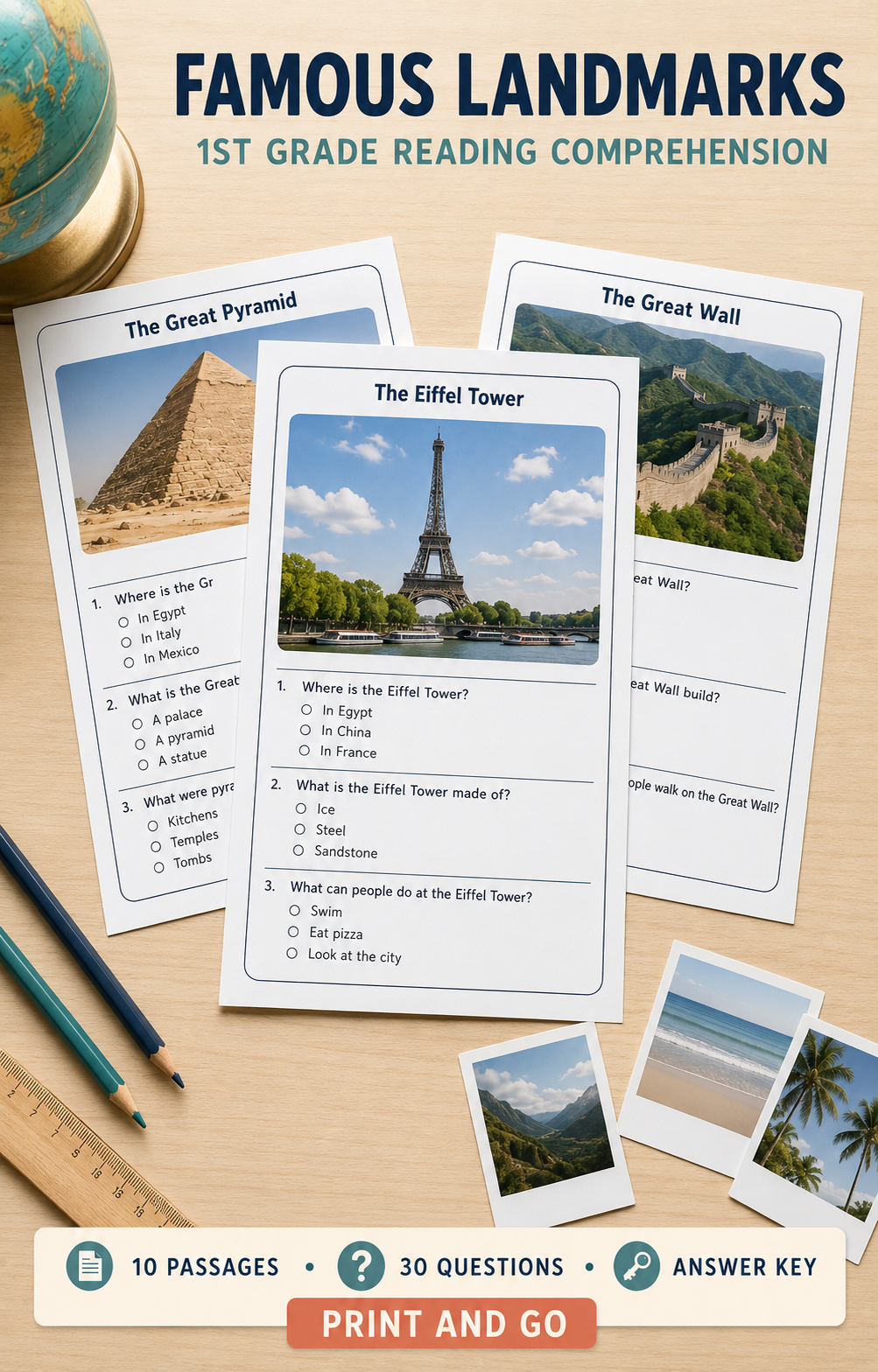
Students read about familiar landmarks and natural wonders, including the Great Pyramid of Giza, the Eiffel Tower, the Grand Canyon, the Great Wall of China, Mount Everest, Niagara Falls, and the Colosseum.
View the Famous Landmarks Reading Comprehension Worksheets on TPT
What Is Included?
The printable resource contains:
- 10 illustrated nonfiction reading passages
- Three multiple-choice questions per passage
- 30 comprehension questions in total
- Complete answer key
- Teacher guide
- Print-and-go PDF format
- Grade 1 informational reading practice
Each passage focuses on one famous place, allowing students to explore the world without being overwhelmed by a long or complicated text.
Landmarks Covered
Students will read about:
- The Great Pyramid of Giza
- The Eiffel Tower
- The Grand Canyon
- The Great Wall of China
- The Leaning Tower of Pisa
- The Amazon Rainforest
- Mount Everest
- The Sydney Opera House
- Niagara Falls
- The Colosseum
The selection includes buildings, historical sites, mountains, waterfalls, and natural environments. This variety helps introduce basic geography and global awareness alongside reading practice.
Reading Skills Students Practice
The questions reinforce several important first-grade reading skills:
- Identifying key details
- Finding the main topic
- Recalling information from a passage
- Understanding simple cause-and-effect relationships
- Using context to understand vocabulary
- Selecting an answer supported by the text
With only three questions following each passage, the worksheets provide focused practice without creating an excessive workload for beginning readers.
What Works Well
One of the strongest features is the accessible format. The passages are short enough for Grade 1 learners, and the three-choice questions are more developmentally appropriate than questions with four or five options.
The illustrations also give students helpful visual context. They make unfamiliar places easier to understand and add interest without turning the activity into a coloring worksheet.
Teachers can use the pages separately instead of completing the entire packet at once. This makes the resource suitable for:
- Literacy centers
- Small reading groups
- Independent practice
- Morning work
- Early finishers
- Homework
- Homeschool lessons
- Geography-themed reading activities
The included answer key also reduces preparation and grading time.
Points to Consider
This resource is designed for short reading-comprehension practice rather than an in-depth geography unit. Each passage includes three multiple-choice questions, so teachers looking for extended writing prompts, maps, research projects, or multi-page activities will need additional materials.
Because first-grade reading abilities vary considerably, developing readers may benefit from hearing the passage read aloud or completing it with teacher support. More confident readers may be able to work independently.
CCSS Connections
The activities support skills connected to:
- CCSS RI.1.1: Asking and answering questions about key details
- CCSS RI.1.2: Identifying the main topic and key details
- CCSS RI.1.3: Understanding connections between information and events
- CCSS RI.1.4: Determining the meaning of words in informational text
Final Review
This packet is a practical choice for teachers and homeschooling parents who want short, visually engaging nonfiction reading passages for first grade. The global-landmarks theme gives children an interesting reason to read, while the consistent passage-and-question format makes the worksheets easy to introduce and reuse.
It works best as supplemental reading practice, a literacy-center activity, or a simple addition to an around-the-world classroom theme.
See the complete resource and preview on Teachers Pay Teachers